

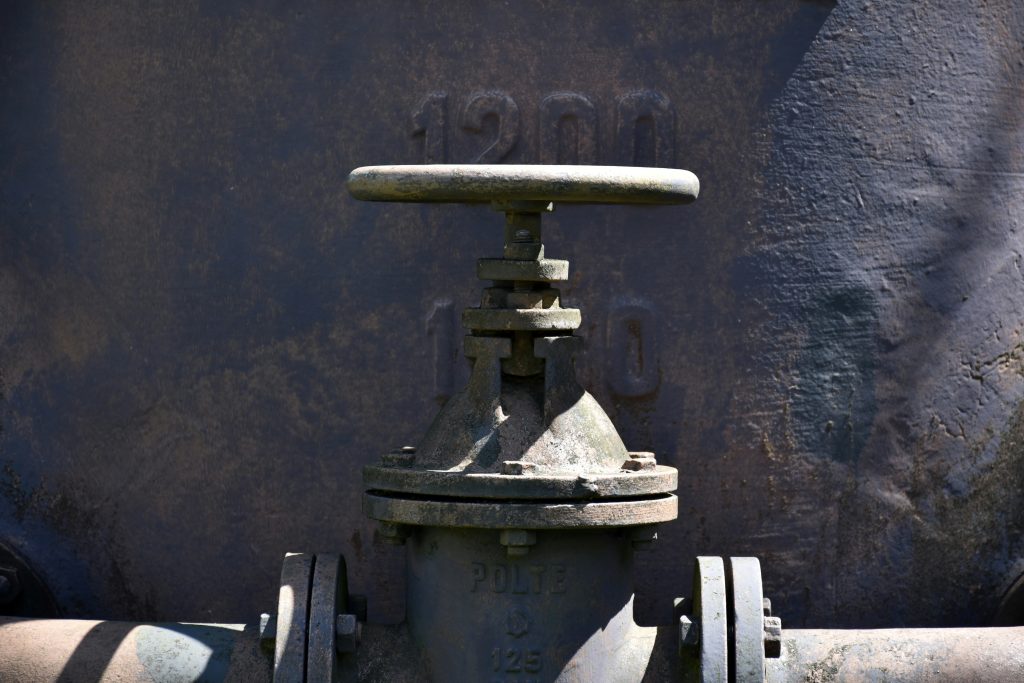
Why Valves Fail in Geothermal and High-Pressure Process Service
A valve that worked reliably for two years suddenly starts leaking past the seat. Another seizes partway through a routine actuation cycle. A third develops visible pitting on a disassembly inspection that nobody expected to find this early in its service life. None of these failures are random, and in geothermal and other high-pressure, high-temperature process environments, they tend to trace back to one of a small number of well-understood mechanisms that a closer look at the original specification usually explains.
Understanding why valves actually fail in this kind of service is the difference between an engineering team that keeps replacing the same failure and one that fixes the underlying specification problem causing it.
Stress Corrosion Cracking: The Failure Mode That Hides Until It Doesn’t
Stress corrosion cracking is among the most consequential and least obvious failure mechanisms in high-temperature, chloride-rich service. It occurs when a susceptible material is exposed simultaneously to a corrosive environment and sustained mechanical stress, conditions that describe geothermal brine service almost by definition given the combination of chloride content, elevated temperature, and the internal pressure stress every valve body and component carries continuously.
What makes stress corrosion cracking particularly dangerous from an operational standpoint is that it frequently produces no visible external warning before failure. A component can appear sound from the outside while a crack propagates internally along grain boundaries, until the crack reaches a critical size and the component fails, sometimes suddenly. This is precisely why material selection for chloride-exposed, high-temperature service cannot rely on alloys chosen for general corrosion resistance alone. An alloy can resist uniform corrosion reasonably well while remaining genuinely vulnerable to stress corrosion cracking under the specific combination of stress and chloride exposure that geothermal brine service applies.
Thermal Cycling Fatigue
Geothermal and high-pressure power generation facilities rarely operate at a perfectly constant temperature and load indefinitely. Startups, shutdowns, load-following operation, and process upsets all introduce thermal cycling, repeated expansion and contraction as temperature rises and falls. Every cycle places stress on valve bodies, seats, and seals, and materials with a poor match between thermal expansion characteristics and the surrounding components accumulate fatigue damage with each cycle even when no single cycle would cause visible damage on its own.
This is a frequently underestimated factor in valve specification, since a fixture that performs adequately under steady-state laboratory testing conditions may behave very differently across years of real thermal cycling in an operating plant. Facilities with frequent startup and shutdown patterns, rather than continuous baseload operation, place meaningfully more cyclical stress on valve components and should weight thermal fatigue resistance more heavily in specification accordingly.
Erosion and Scaling from Mineral-Laden Flow
Geothermal brine and many high-pressure industrial process fluids carry dissolved minerals and, in some cases, suspended particulates that interact with valve internals in two distinct and equally damaging ways. Erosion occurs as flow velocity carries abrasive content across sealing surfaces and trim, gradually wearing away material in a pattern that often concentrates at points of highest flow velocity or turbulence, such as immediately downstream of a partially open valve. Scaling works in the opposite direction, depositing dissolved minerals onto internal surfaces as fluid conditions change, which can interfere with sealing surfaces, restrict moving parts, and in severe cases prevent a valve from fully closing or opening as designed.
Both mechanisms tend to be progressive rather than sudden, which means a valve experiencing either can continue functioning, with gradually degrading performance, for some time before failing outright. Regular inspection and a clear understanding of which valves in a facility see the highest erosion or scaling risk based on their position in the process allows maintenance teams to catch this degradation before it becomes an unplanned failure.
Seal and Packing Degradation Under Sustained Heat
Valve packing and seal materials, whether elastomeric, graphite-based, or another engineered material, have a finite temperature range within which they maintain both sealing integrity and mechanical resilience. Sustained operation at or beyond the upper end of that range accelerates material breakdown, leading to leakage past the stem or seat well before the rest of the valve has reached the end of its useful life.
This failure mode is frequently misdiagnosed as a valve quality issue when the actual root cause is a packing or seal material mismatched to the actual operating temperature of the specific installation point. A seal rated adequately for the average temperature of a process line may still fail prematurely if that specific point in the system runs hotter than the line average, which is common near wellheads and high-temperature separators in geothermal service.
Galvanic Corrosion at Material Transitions
Wherever dissimilar metals meet in a wetted assembly, bolted connections, dissimilar trim and body materials, or transitions between piping and valve materials, the potential exists for galvanic corrosion to accelerate degradation of the less noble material in that pairing. This is a common and avoidable cause of premature failure at specific points within an otherwise well-specified system, and it is frequently overlooked because the failure shows up at a connection point rather than within the valve body itself, making the root cause less obvious during initial inspection.
What Prevents This: Specification Built on the Actual Failure Mode
Each of these failure mechanisms points toward a different correction in specification. Stress corrosion cracking risk argues for alloy selection validated against the actual chloride concentration and temperature of the specific service, not a generic corrosion-resistant grade. Thermal cycling fatigue argues for material and design choices suited to the facility’s actual operating pattern, not just its nominal temperature rating. Erosion and scaling argue for trim and seat design appropriate to the mineral content of the specific fluid. Seal degradation argues for packing rated to the actual point-of-installation temperature, not the line average. Galvanic corrosion argues for careful attention to material compatibility at every connection point, not just within the valve itself.
Belven’s quarter-turn valve range is engineered with this layered failure analysis built into material and design selection from the outset, rather than treating high-temperature, high-pressure service as a single generic specification tier. For facilities experiencing repeated valve failures in geothermal or other demanding process service, working backward from the actual failure mechanism observed, rather than simply replacing the failed component with an identical one, is the step that breaks the cycle of paying for the same failure repeatedly.
Looking for Industrial Equipment in the Philippines?
Ultra Power Industrial Resources provides reliable equipment and solutions across all major Philippine industries.
Start Your Assessment