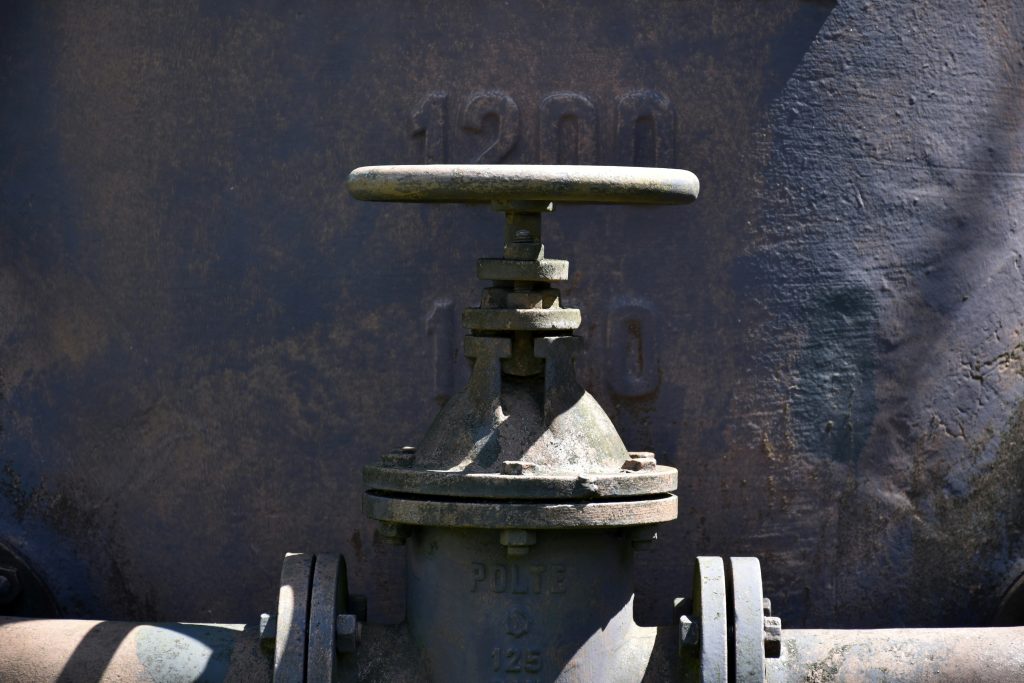
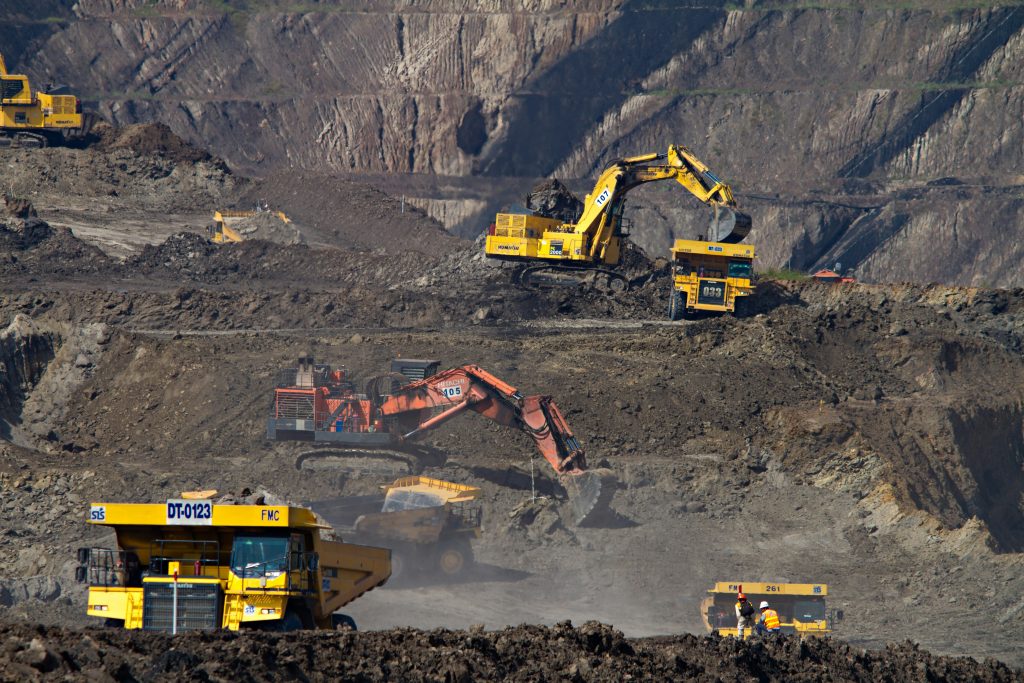
Mining excavation site representing valve reliability in abrasive mining operations

Valve Reliability in Mining Operations: Handling Abrasive and High-Pressure Flow

Mining operations put valves through a combination of stresses that few other industrial applications match simultaneously. Slurry lines carry suspended solids that erode internal surfaces with every cycle. Process pressures run high across extended continuous operation. Unplanned valve failure in a mining process line rarely produces a quiet, contained problem, it produces a process stoppage, […]

Valve Reliability in Mining Operations: Handling Abrasive and High-Pressure Flow Read More »

Industrial valve mechanism illustrating ball and butterfly valve design comparison

Ball Valves vs Butterfly Valves: Choosing the Right Design for High-Pressure Process Lines

Specifying a quarter-turn valve for a high-pressure industrial process line often comes down to a choice between two fundamentally different mechanical designs, ball valves and butterfly valves, each of which solves the problem of controlling flow in a genuinely different way. Both are widely used across industrial process service, and both have legitimate, well-understood applications.

Ball Valves vs Butterfly Valves: Choosing the Right Design for High-Pressure Process Lines Read More »

Industrial power plant at night representing valve procurement for power generation

Valve Procurement Specification Guide for Power Plant and PhilGEPS Projects

Writing a valve specification for a power plant project, whether for a private facility expansion or a government-funded infrastructure bid through PhilGEPS, involves satisfying two requirements that do not always reinforce each other naturally. The specification has to be technically sound enough that the valves actually procured perform reliably in demanding power generation service. It

Valve Procurement Specification Guide for Power Plant and PhilGEPS Projects Read More »

Close-up of an old industrial valve showing wear and corrosion

Why Valves Fail in Geothermal and High-Pressure Process Service

A valve that worked reliably for two years suddenly starts leaking past the seat. Another seizes partway through a routine actuation cycle. A third develops visible pitting on a disassembly inspection that nobody expected to find this early in its service life. None of these failures are random, and in geothermal and other high-pressure, high-temperature

Why Valves Fail in Geothermal and High-Pressure Process Service Read More »

Industrial pipes representing geothermal valve and piping material selection

Geothermal Valve Specification: Material Selection for High-Temperature Brine Service

Geothermal power generation runs on a fluid that is unusually hard on the equipment carrying it. Geothermal brine arrives from deep underground at high temperature and high pressure, carrying dissolved minerals, chlorides, and often hydrogen sulfide and carbon dioxide that make it meaningfully more corrosive than the process fluids most industrial valves are designed around.

Geothermal Valve Specification: Material Selection for High-Temperature Brine Service Read More »

LED street light on a pole at night for LGU roadway lighting procurement

Street Lighting for LGUs and Infrastructure Projects: A Procurement Specification Guide

Street and roadway lighting procurement sits at the intersection of two demands that do not always pull in the same direction. The specification has to satisfy genuine photometric and engineering requirements, since poorly lit roads carry real safety consequences, and it has to survive a public procurement process where the specification itself can be challenged,

Street Lighting for LGUs and Infrastructure Projects: A Procurement Specification Guide Read More »

Industrial pipes with dramatic lighting illustrating lux and illuminance levels

How to Calculate Lux Requirements for Industrial Facilities

A common complaint reaches facility management long before anyone frames it as a lighting specification problem. Workers report that a section of the floor feels dim. Quality inspectors miss defects they should be catching. A safety audit flags a walkway as inadequately lit. Each of these is, at its root, the same issue: the lighting

How to Calculate Lux Requirements for Industrial Facilities Read More »

Industrial plant lit up at night after LED lighting retrofit

LED Retrofit ROI: When Replacing Your Factory Lighting Pays for Itself

The capital expenditure conversation around an LED retrofit usually starts with the same hesitation. The existing fluorescent or metal halide fixtures still work, the lighting still meets the basic need, and a retrofit project competes for budget against equipment that has clearly failed and needs replacing now. Lighting, by contrast, is easy to keep deferring.

LED Retrofit ROI: When Replacing Your Factory Lighting Pays for Itself Read More »

Close-up of industrial LED light fixture interior showing driver and heat sink components

Why Industrial LED Fixtures Fail Early in Philippine Conditions: Heat, Humidity, and Surge

A plant engineer replaces a bank of fluorescent fixtures with LED, expecting the long service life the technology promises. Eighteen months later, a quarter of those fixtures are dead, dim, or flickering. The engineer is not wrong to expect more from LED. The fixture was wrong for the environment it was installed in. This pattern

Why Industrial LED Fixtures Fail Early in Philippine Conditions: Heat, Humidity, and Surge Read More »

Goodlite Zone 1 Zone 2 explosion-proof industrial light fixture in hazardous area

Explosion-Proof Lighting for Hazardous Areas: Zone 1 and Zone 2 Explained

Industrial facilities that handle flammable gases, vapors, or combustible dust operate under a constant and unforgiving constraint. A single spark from the wrong fixture can ignite an atmosphere that the rest of the plant depends on managing safely every hour of every shift. Lighting is rarely the first thing engineers think about when they assess

Explosion-Proof Lighting for Hazardous Areas: Zone 1 and Zone 2 Explained Read More »