
Why Regular LED Lights Are Not Enough for Hazardous Industrial Applications
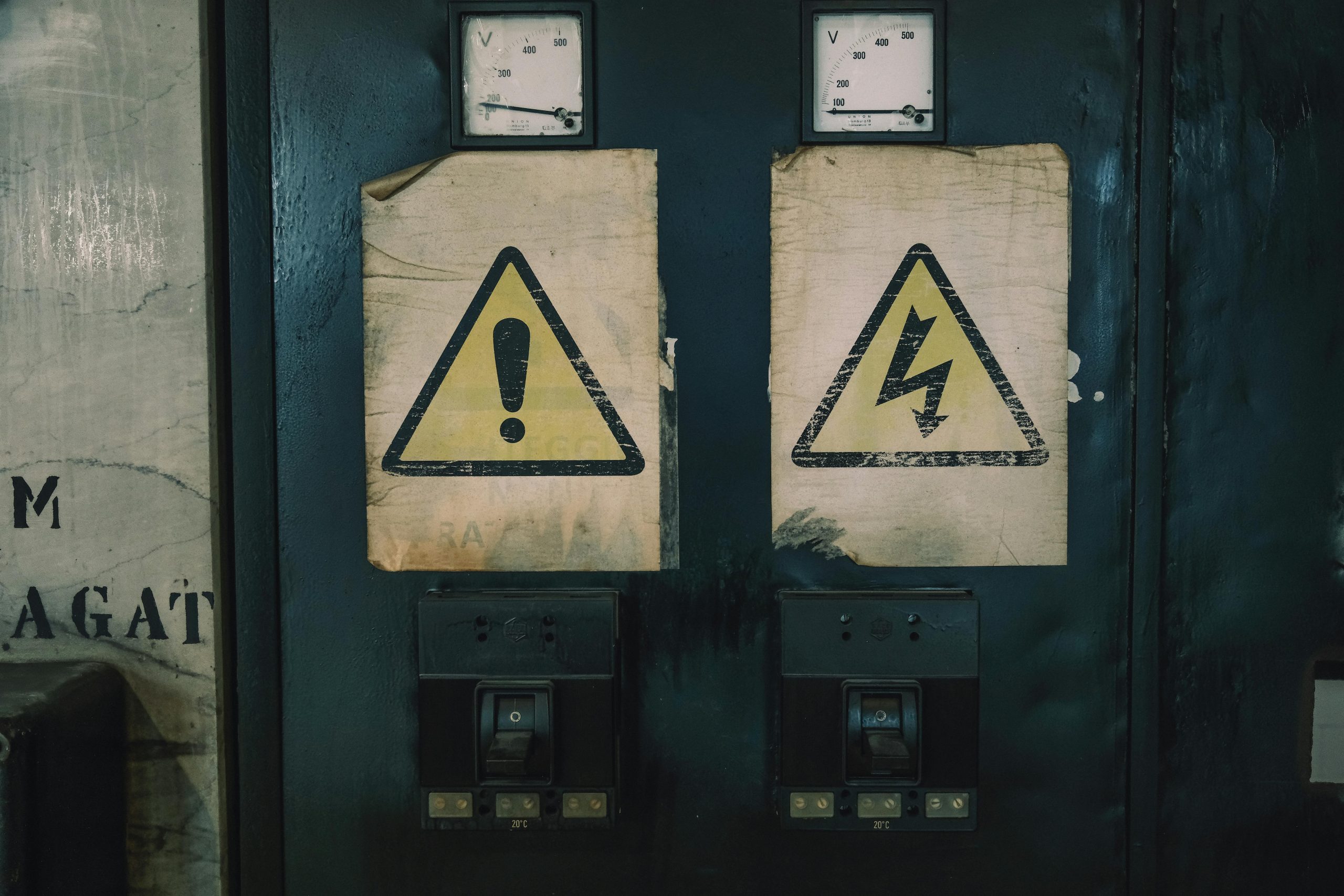
LED lighting is widely recognized for energy efficiency, long service life, and lower maintenance. In ordinary buildings, that makes it an easy choice. But in hazardous industrial environments, those benefits alone are not enough, because a regular LED fixture may still become a source of overheating, electrical failure, ignition, or fire if it is installed in the wrong setting.
This is where many companies make a costly mistake. They assume that because a fixture is LED, bright, and marketed as industrial, it is already safe for demanding plant conditions. In reality, hazardous environments require a completely different level of protection, certification, and engineering.
Hazardous Environments Change the Rules
A hazardous industrial area is any environment where flammable gases, vapors, combustible dust, ignitable fibers, or similar materials may be present in enough concentration to create fire or explosion risk. These conditions are common in geothermal plants, chemical processing facilities, fuel-handling areas, grain plants, mining sites, battery rooms, and other heavy industrial operations.
In these places, lighting is no longer just about visibility. A light fixture becomes part of the facility’s overall safety system because it must operate without becoming a source of ignition. That single requirement is what separates ordinary LED products from properly specified hazardous-area lighting.
Why Ordinary LED Fixtures Can Still Be Dangerous
Many people think LED lights are automatically safe because they run cooler than traditional lamps. That is only partly true. While LEDs are generally more efficient, the full fixture still contains drivers, wiring, terminals, and electrical components that can fail, overheat, short circuit, or spark under the wrong conditions.
In a normal commercial environment, this may only lead to product failure. In an industrial plant with flammable vapor, gas, or combustible dust, that same failure can trigger a serious incident. The risk is not just poor performance. The risk is fire, explosion, damage to equipment, injury to personnel, and operational shutdown.
Fire Risk Is Not Just Theoretical
One of the most important points for plant operators is that lighting-related fires are real. Documented investigations have shown that poorly matched LED retrofits can overheat and cause fire. In one warehouse incident investigation, incompatible LED tubes and ballast systems were identified as the likely cause of overheating and fire in retrofitted fluorescent luminaires.
That example matters because it proves a broader lesson. A lighting fixture does not need to burst dramatically into flames to become dangerous. Improper compatibility, poor heat management, moisture ingress, or substandard electrical design can be enough to create a serious fire event, especially in industrial settings where consequences are amplified.
The Real Problem: False Confidence
One reason these risks are often overlooked is that ordinary LED fixtures can look rugged and professional. A product may have an aluminum housing, a clear lens, and a label claiming it is suitable for industrial use. To a buyer focused on price, it may appear more than adequate.
But appearance is not protection. Many products are designed for general industrial or outdoor service, not for hazardous atmospheres. That means they may survive dust and rain, but still fail to prevent ignition if exposed to flammable gases, vapors, or combustible particles.
IP65 Is Not Enough
This is one of the most common misunderstandings in the market. Buyers often see IP65 or IP66 and assume the fixture is already safe for harsh industrial use. In truth, IP ratings only measure resistance to dust and water ingress. They do not certify the light for explosive or hazardous atmospheres.
So, is IP65 okay? Yes, for some ordinary outdoor or non-hazardous industrial environments, IP65 may be acceptable. But in hazardous locations, IP65 alone is not enough. A fixture can be fully weatherproof and still be completely unsuitable for a classified area.
What Certifications Actually Matter
For hazardous industrial applications, the fixture should carry the proper certification for the site and market. Common standards include UL 844 for North America, ATEX for the European Union, and IECEx for international hazardous-area applications. These certifications are not optional details. They are the clearest evidence that the fixture was designed and tested for environments where ignition risk is real.
The label or datasheet should also show the exact classification, such as Class/Division or Zone rating, the gas or dust group, and the temperature class. Without these details, the fixture should not be assumed safe for hazardous use. In these environments, “industrial grade” is not enough; the product must be specifically certified for the actual hazard.
Why Temperature Matters More Than Most Buyers Realize
Another dangerous assumption is that LED fixtures are always cool enough to be harmless. In reality, the LED chip may be efficient, but the total luminaire still generates heat, especially in the driver and thermal management system. If that heat is not properly controlled, the fixture surface or internal components may reach temperatures that are unsafe for the surrounding environment.
In hazardous areas, this is critical because certain gases, vapors, and dusts can ignite if exposed to hot enough surfaces. That is why temperature class is such an important part of hazardous-area lighting selection. A fixture may produce excellent light output and still be the wrong choice if its thermal characteristics do not match the environment.
Geothermal Plants Are Not Ordinary Lighting Environments
Geothermal facilities deserve special attention because they often combine multiple stress factors at once. Depending on the area, lighting may be exposed to steam, heat, outdoor weather, corrosive conditions, moisture, vibration, and in some zones, hazardous classifications tied to process equipment or gas-related risk. This is far beyond what standard commercial LED fixtures are built to handle.
Even solar street lights near geothermal plants must be selected carefully. If they are installed in general perimeter roads or non-classified outdoor spaces, a durable outdoor-rated product may be enough. But if the location is near a hazardous boundary or process zone, then weather protection alone is not enough and hazardous-area certification becomes necessary.
The Cost Of Getting It Wrong
The most dangerous lighting decisions usually begin as cost-saving measures. A regular LED fixture is cheaper, easier to source, and may look good enough on paper. But in hazardous industrial environments, the lowest-priced product can become the most expensive mistake in the project.
Once failure happens, the consequences extend well beyond replacing a fixture. Companies may face production downtime, damaged assets, injury risk, insurance complications, investigation costs, regulatory scrutiny, and reputational damage. After an incident, the discussion is no longer about lumens or wattage. It becomes a question of whether the risk should have been seen and prevented in the first place.
Why This Should Concern Management, Not Just Maintenance
Lighting decisions are often delegated to procurement, maintenance, or project teams. But in hazardous environments, this is not merely a purchasing issue. It is a management issue because it involves risk exposure, compliance, business continuity, and corporate responsibility.
A lighting failure in a hazardous area can trigger consequences far beyond the maintenance department. Senior leaders may suddenly have to answer for operational disruption, preventable safety failures, client concerns, or investor questions. That is why mature organizations evaluate lighting not only by cost, but by consequence of failure.
What A Safer Approach Looks Like
The correct approach starts with classification. Before any fixture is selected, the installation point should be reviewed to determine whether it is a non-hazardous area, a harsh industrial environment, or a classified hazardous zone. From there, the lighting should be matched to the actual site conditions, not just to budget or visual appearance.
A proper evaluation should confirm the required certification, the zone or class/division rating, the gas or dust group, the temperature class, and the environmental durability needed for heat, moisture, corrosion, or vibration. Installation quality also matters, because even a certified product can become unsafe if improperly wired or mounted.
The Corporate Reality
Regular LED lights are designed to reduce energy use and maintenance in ordinary environments. Hazardous-area lighting is designed to prevent ignition, contain failure, and protect operations in environments where a single mistake can have outsized consequences.
That is the real distinction companies need to understand. In hazardous industrial applications, the wrong lighting fixture is not simply underperforming equipment. It is an avoidable risk with the potential to escalate into fire, shutdown, compliance exposure, and liability.
Final Thought
In industrial safety, some of the biggest failures begin with small assumptions. One of the most common is believing that a regular LED light is “good enough” because it is efficient, modern, and inexpensive. In hazardous environments, that assumption can be dangerously wrong.
The right question is not whether a fixture can turn on. The right question is whether it can operate safely in the exact environment where it will be installed. In hazardous industrial settings, that difference is everything.
Valve Seat Materials Compared: PTFE, Metal Seat, and Elastomer for
Valve seat material selection is one of the specification decisions most often made by default rather than by deliberate evaluation,…
Common Valve Specification Mistakes in Philippine Industrial Procurement
A valve specification that looks complete on paper, with a pressure class, a temperature rating, a material designation, and a…
Valve Selection for Geothermal Reinjection Lines: Pressure, Chemistry, and Isolation
Geothermal reinjection, the process of returning cooled brine back into the underground reservoir after energy extraction, is a distinct and…
Goodlite Explosion-Proof Lighting: What Sets It Apart From Standard Industrial
When a Philippine oil and gas facility, power plant, or chemical processing site specifies explosion-proof lighting, the requirement is not…

High-Bay LED Lighting for Philippine Warehouses and Distribution Centers
Warehouse and distribution center lighting in the Philippines has been through a slow but significant transition over the past decade,…

Emergency and Exit Lighting Compliance for Philippine Industrial Facilities
Emergency and exit lighting is one of the more straightforwardly life-safety-critical systems in any industrial facility, and one where the…


Have a Project to Discuss?
Our engineers are ready to help you specify the right solution for your facility.
Contact Us